Tag Archives: travel

Relaxing Versus Exploring Vacations

“I need a vacation.” These words are uttered so frequently during exhausting seasons of life, especially now, in the midst of a pandemic, when very few people are traveling. However, not all vacations are created equal. There are vacations where you want to see and visit everything possible–the kind of vacation that makes you feel like you need a vacation from your vacation, and there are vacations that are relaxing and refreshing on many levels. Understanding what type of vacation you want or need can be beneficial before planning your travel destination and trip details.

Often, when I travel to a new place, I want to see and do everything possible that the destination has to offer. These types of vacations can be extremely fun, but also extremely exhausting. Typically, your destination determines the type of vacation you end up having.

Relaxing vacations

Going to the beach is generally relaxing. Traveling to the mountains is also relaxing. If you feel like you need to go somewhere to get away, relax, and clear your head, destinations like the beach, the mountains, or National Parks are great options. At these places, you can enjoy nature, clear your head, and have no agenda, other than what you decide to do each day.

When you are overwhelmed or feel like you need to recharge, these are the best types of vacations to plan. Camp, roast marshmallow, watch a beautiful sunset, and spend your days doing nothing but enjoying nature. These types of vacations typically leave you feeling refreshed and recharged.

Exploring Vacations

Visiting a big city or a “tourist” destinations would typically fall under the category of an exploring vacation. When you visit a new city, there are so many options of things to do and see: museums to visit and excursions to attend. For example, when you visit Washington, D.C., you can visit the Lincoln Memorial, the Washington Monument, the Capitol, the White House Museum, the Smithsonian Museums and Zoo, Arlington National Cemetery, etc. Visit any travel website and you will find hundreds of suggestions of things to do in Washington, D.C.

The same is true about most major cities. When visiting Orlando, many families view this as a once-in-a-lifetime experience and try to visit all the Disney parks and/or all the Universal parks. Every day is filled with theme park adventures.

Whether you are visiting Washington, D.C., or Orlando, or Boston, or Hollywood, there is often a sense of energy and excitement to visit places that you have previously only heard about and dreamed of visiting. These types of vacations are new and exciting adventures that will be remembered for years to come.

However, these types of vacations are typically exhausting. Long days in the sun at a theme park trigger meltdowns in children. Walking from one destination to the next and the next is also exhausting. There is a time and a place for exploring vacations. If you are wanting to experience new adventures, this is the perfect type of vacation!

The Decision Making Process

It is important to be honest with yourself before planning a vacation. If you have had a long year and just feel like you need a break, planning a relaxing vacation is best. On the other hand, if it is summer, and the kids are going stir-crazy, perhaps an exploring vacation where you get to see and do a lot of unique activities would be better.

In the past, there have been times I needed to relax, unwind, and clear my head where I planned a vacation to a big city, thinking all I needed was a vacation. In these times, I enjoyed the vacation, but arrived back to “real life” without feeling recharged and refreshed.

Understanding that there are different types of vacations that you can plan is important to helping you match your vacation with your present state of mind and personal needs. With that being said, I do know that some people plan vacations a year in advance. Because of this, they are not going to know how they will feel a year in the future. In these situations, it is best to evaluate when your busy or calm times of the year are, and how you typically feel that time of year. Also, in planning a vacation much in advance, consider trying to choose a place that would offer a blend of exploring and relaxing.

Finding Balance

The truth is that most vacations do offer a little of both relaxing and exploring. Sitting and enjoying a meal at a restaurant in a big city is typically a relaxing way to unwind after a long day of exploring. Visiting the closest city to a National Park and exploring all of the facets the park has to offer allows you to explore during a relaxing vacation. Vacations are not all one or the other, but they often are more relaxing or more exploring, depending on your destination.

If you are unsure which type of vacation you will need or if you feel you want to both relax and explore, consider only planning activities for half of your vacation time. Plan to go into the city or do excursions on half the days, and then allow the other half of the days for relaxing by a pool, having a campfire, hanging out at your hotel room or campsite, or clearing your head on top of a mountain, by a body of water, or at some other scenic spot.

It is easy to arrive at a travel destination and want to see and do everything, or to completely detach and do nothing. However, by having a plan of what type of vacation you need before you start your travels, you can be more intentional about ensuring your vacations meets those needs, so that when you return back to “real life,” you do not arrive feeling like you need another vacation because the one you took was fun…but not what you needed.

If you have enjoyed this article, please like or comment below. Also, follow my page for more tips and stories about life and travel!
How an RV Saved us Money and Headaches

An RV is a big investment. Even used RVs often cost tens of thousands of dollars. Until five years ago, we never even considered purchasing an RV. Before the purchase of our RV, our vacations consisted of two or three trips a year to visit out-of-state family members, and a yearly beach trip with our family. With these trips, we road tripped an average of 12-hours each way to get to our destinations and traveled about once every three months with our four small children.

In 2015, I really don’t know why, but my husband and I began discussing the option of purchasing an RV. We loved traveling and thought traveling in an RV would definitely be more comfortable than cramming our family of six into our car for long trips. After exploring the options, we decided on a Class A RV, which is basically one of the largest RVs you can buy, to fit our large family. We didn’t have a truck suitable for pulling a travel trailer and didn’t like the idea of having to unhook the trailer at every stop, nor did we think a smaller option (Class B or C) would appropriately fit our family, so after consideration, we found an old, but updated, Class A RV.

Even used RVs can be pricey, but because we bought an 15-year-old RV, we were able to get it at a price that fit our family budget, and after purchasing the RV, our vacation costs were cut by more than half.

Advantages

The biggest areas of savings: food and hotels. The conveniences: not having to pack and repack your things, having room to move, and having things to do.

Food

Because we now typically stay in an RV when we travel, we eat more meals in the RV. We have a stove in the RV, and we always travel with a grill, so we frequently make eggs or other elaborate breakfasts before heading out for the day. Lunch is often sack lunches (sandwiches and chips) while we are out and about. Also, because we love grilled food, we often end the day with grilled steaks or chicken. Yes, we still enjoy going out to eat to enjoy local cuisine while we travel, but traveling in our RV limits the need to go out, because with a trip to the grocery store, we can eat camp food that we enjoy, and save ourselves money in the process.

Hotels

An RV prevents us from having the cost of hotels. We basically have a hotel on wheels. Hotel costs are one of the biggest expenses of travel. With an RV, you still have to pay for a campsite at an RV park, and the better RV parks definitely cost more, but even really nice RV parks are typically a quarter to half the price you would pay at a hotel. This equates to thousands of dollars of savings when we travel, as our summer trips often last three or four weeks.

The Convenience of Not Having to Unpack and Repack your Things

Kids have a lot of stuff, and if your kids are anything like mine, they are not necessarily great about keeping things in their suitcases. When we stay in hotels, items often get lost or forgotten; someone inevitably remembers that they lost their favorite small trinket when we are two hours away from the hotel. As a mother, this has been perhaps the biggest joy of having an RV. I no longer worry that we are forgetting things. Everything we need and want stays in our RV, with the exception of outside toys that the kids may play with. There is very little worry that items will be forgotten, nor is there a need to pack up things each morning to continue traveling toward the final destination.

The Convenience of Having Room to Move

Although we do not typically allow our children to walk around the RV when we travel for safety reasons, there is definitely enough room for everyone in the RV. No longer are we squished into a small car together for hours on end. When we travel, everyone has room to spread out: some will sit at the table, others will sit on the couch, and someone will sit in our swivel chair. With all of these areas, there is space to lay down, to play, and to have breaks from one another. Another huge advantage is that we don’t have to stop every time someone is hungry or needs to use the restroom!

The Convenience of Having Things to Do

An RV is like a small home. In our RV, we keep games, books, magazines, toys, coloring books, art activities, a TV, and outdoor toys for the kids. Essentially, it is like traveling with a house on wheels. The RV also has loads of storage space, so all of these items have their own space. Unlike traveling in a car, you do not have to be extremely selective about what you bring when you travel in an RV. The kids don’t have to choose a few toys and a few books to bring, because there is room in our RV for lots of items. We have an entire two door, four-foot long closet to store items the kids want to bring. These items keep the kids entertained when traveling down the road and while hanging out at our campsite. Yes, we still need to be selective because an RV isn’t as big as our house, but traveling is much more enjoyable because the kids are able to bring and access many more of the things that they love.

Disadvantages

However, it is also important to know drawbacks associated with traveling in an RV. As with anything, there are also some disadvantages that should be noted. The drawbacks: gas costs, vehicle size, slower travel, and fighting the wind.

Gas Costs

I need to begin by saying that we have a gas RV, rather than a diesel. When we travel, it is typical for us to get 8 miles a gallon (and sometimes less), especially when driving in mountainous areas. This does become an additional expense on trips because it is about a third of the gas mileage than what we get with our family car.

Vehicle Size

Our RV is 33-feet long. There are certain stops that we skip along the way because we simply cannot fit. As we travel, we have to be careful that we find gas stations that we can easily get in and out of. There are some restaurants that have no parking for RVs, and there are some excursions that we would like to do that simply don’t have RV parking. We could stop and park for the evening at an RV park and spend a day at the excursion. However, because we typically want to get to our final destination, losing a day is not ideal. With a car, it is easy to pull into a place for an hour or two, to explore, and then be on your way. If a destination has RV parking, you can do this on an RV trip as well. However, it is often hard to tell if a place will have room to park an RV, as many places do not advertise it. We have also gotten into situations where we have turned down dead-end streets without realizing it, entered towns there the streets and mountain roads that were not conducive to RVs, and struggled to find a place to get gas or eat because they did not have space for an RV. These situations can be nerve-racking and down-right scary. As you get more experienced, you learn how to avoid these situations, but it is something you need to be intentional about when travel planning with an RV.

Slower Travel

Driving 75 miles an hour, as you would in a car, is typically not possible in an RV. With most RVs, about 60-65 miles an hour is a comfortable highway speed. This equates to less ground covered each hour. Also, with essentially driving a house on wheels, it is more taxing than driving a car. Because of this, we often only drive 6-8 hours a day when traveling in our RV, where we will typically drive 12-14 hours in a car. It seems that without having to stop for meals or the restroom, that you would be able to get places faster. However, this is not usually the case. Trying to keep a 33-foot RV on the road is mentally taxing, plus you still have to stop for the driver to be able to use the restroom and often eat meals (because it is much more difficult to eat while driving in an RV than a car).

Fighting the Wind

An RV is essentially a wall driving down the road. RVs are not wind resistant. Especially when traveling out west where there are few trees to create wind resistance, you feel every wind gust that blows. They hit the side of your RV with a vengeance and make it feel like you are struggling to keep the vehicle on the road; this adds to the already taxing nature of driving a 33-foot vehicle down the road. We have had some scary moments where it literally felt like the wind was going to pick our RV off the ground or blow us off a cliff. Because of this, wise planning is important. We pay attention to wind speeds and try to travel when wind speeds are lowest for the day. This sometimes means that we travel early in the morning, stop somewhere for an outing in the afternoon, and then travel again in the evening.

These drawbacks are not shared as a way of scaring you, but instead, to help you consider both the benefits and the drawbacks of traveling in an RV. For us, having the ability to just hop in and drive, has allowed us to travel and explore places we never would have been able to afford. We never could have paid to travel to Yellowstone, the Badlands, and Mt. Rushmore for three weeks, with the cost of flights for six, hotel costs, and meals out. We also never could have afforded to traveled to Grand Canyon, Zion National Park, and Bryce Canyon for a month. With our RV, when traveling to less populated areas, such as the western United States, we often are able to travel for between $100-$150 a day for our family of six, including food, gas, campsites, and excursions. Traveling to highly populated areas often cost us around $200 a day because campsite prices are higher, we often have to pay for public transportation, and tourist activities/excursions often cost more as well. However, just renting a hotel room for a night costs about what we spend for our entire day’s expenses when traveling in our RV.

For us, purchasing an RV allowed us to plan longer vacations and provided us a way to travel comfortably and affordably to areas we never would have considered visiting with our large family. The hassle of packing and repacking at hotels along the way, as well as the costs of traveling with four children, were a huge deterrent, but once we purchased an RV, loading up and planning month long vacations became a fun summer activity. Forty states and thousands of amazing photos later, we do not regret our decision and have memories to last a lifetime!

10 Ways to Save Money on a Vacation to a City

1.  Try to find as many free excursions as possible.

Most cities have free activities that are enjoyable. By finding free activities to include in your travels, it helps bring down the overall cost of the trip.

2.  Stay at a hotel with a continental breakfast.

Breakfast at restaurants gets pricey. For a family of six, even a cheap breakfast out can cost $50-60 a day. On a ten-day trip, this equates to an extra $500. By staying at a hotel with a continental breakfast, you avoid this expense. Another option is to purchase breakfast foods at a grocery store (if your hotel has a refrigerator) and eat in your room before you start your activities for the day.

3.  Stop at a grocery store to purchase groceries. 

Having groceries in your hotel room cuts down on eating out costs. Not only can you pick up breakfast items or items to make sandwiches, you can also pick up snacks for your stay, as purchasing snacks from vendors is much more expensive than purchasing packaged items at a grocery store.

4.  Try to limit meals out to one per day.

Many families use vacations as an opportunity to eat out. However, eating out costs can become a major expense during travels. If you are wanting to travel economically with a large family, this is one of the best ways to limit costs, while still allowing your family opportunities to enjoy local cuisine. By eating out only once a day rather than three times a day with your family, you can save over $100 a day, which equates to over $1000 for a 10-day trip! This extra money can be used for another trip or for additional excursions and experiences on your current vacation.

5.  Consider eating lunch out, as lunch meals are typically less expensive than dinner.

Although lunch portions are typically a little smaller than dinner portions, lunch prices are often substantially cheaper than dinner prices. Also, when traveling with a family, it is often nice to allow time to wind down in the evening, so lunch, while you are out and about anyway, is the perfect time to eat out.

When we travel, we frequently purchase sandwich items to eat in our hotel room for dinner. After a long day of excursions (often in the heat of summer), we often do not feel extremely hungry at the end of the day, and we look forward to watching TV and unwinding with the kids in our hotel room. Sandwiches and snacks in the hotel are a cheap meal and also provide us this opportunity to relax and unwind before setting out again the next morning.

6.  Research the city transportation schedule.  If the city offers a discount for riding at non-peak times, plan your day to hit those non-peak hours.

Riding city transportation at peak times can be double the cost of riding at non-peak times. This can equate to a substantial amount of money when traveling with a family. By planning your day around non-peak times, you still can have a substantial amount of time to explore the city, while saving money. For example, in Washington, D.C., if you ride the metro after 10:00 a.m. you pay about half price. This allows you time in the morning to relax and enjoy continental breakfast before starting out. Then if you ride the metro back to your hotel after 7:00 p.m, which also was a non-peak time, you again pay about half price. This schedule allows you to save money, while still allowing you nine hours or more to explore the city each day.

7.  Utilize the fresh fruit or refreshments that your hotel offers; they make great snacks and treats throughout the day.

Many hotels have complementary cookies, fresh fruit, or other snacks that they make available for guests. Grabbing one of these items allows you to save money on a snack or treat later in the day. We never use these items as our entire source of snacks when traveling, but sometimes when we are exploring a city in the heat of the day, an apple is a welcome, refreshing snack. Also, the cookies often prove to be a nice treat at the end of a long day.

8.  Consider staying in an inexpensive suite-style hotel to have beds for everyone in your family.

Many budget-friendly hotels are moving away from suite-style rooms, opting for more traditional-style hotel rooms. However, if you can find a hotel that offers a budget-friendly suite, they typically have room to sleep 6–two queen beds and a pull-out couch. Rather than having people sleep on a cot or the floor, this provides a budget-friendly way to have beds for everyone in the family.

9.  Stay outside of the city, as hotel prices are usually substantially cheaper.

Staying downtown can be convenient because you are right in the heart of where you will be vacationing. However, even the cheapest hotels in a city are often three times the price of hotels outside of the city. In addition, hotels located in downtown areas often do not offer continental breakfasts. By staying outside the city, even with the added transportation costs of having to travel into the city, you will typically save a bundle.

10. Create a reasonable budget and stick to it!

It is easy to get carried away on vacation. When you are traveling, all of the excursions sound fun and many people fall into the trap of thinking, “I am going to enjoy this because it may be the only time I ever visit this place.” The problem with this mindset is that it often causes people to go over budget, and then the next time they want to travel, they think about how expensive traveling is and have second thoughts about planning a trip.

By creating and sticking to a budget (or even spending less than your budgeted amount), it often makes you feel that travel is more of an option. Spending less on a trip, often does something in your brain, where it begins to feel like traveling is not that expensive so you can do it more frequently. On the other hand, some people save thousands and thousands of dollars for one trip, creating a massive budget, but this can create a feeling that trips are so expensive that they can only be taken occasionally. By creating a budget that is reasonable and sticking to it, it empowers you to feel that traveling more often is within reach!

If you have enjoyed this article, please like or comment below. Also, follow my page for more tips and stories about life and travel!
A Tour of the Northeast (Part 2)

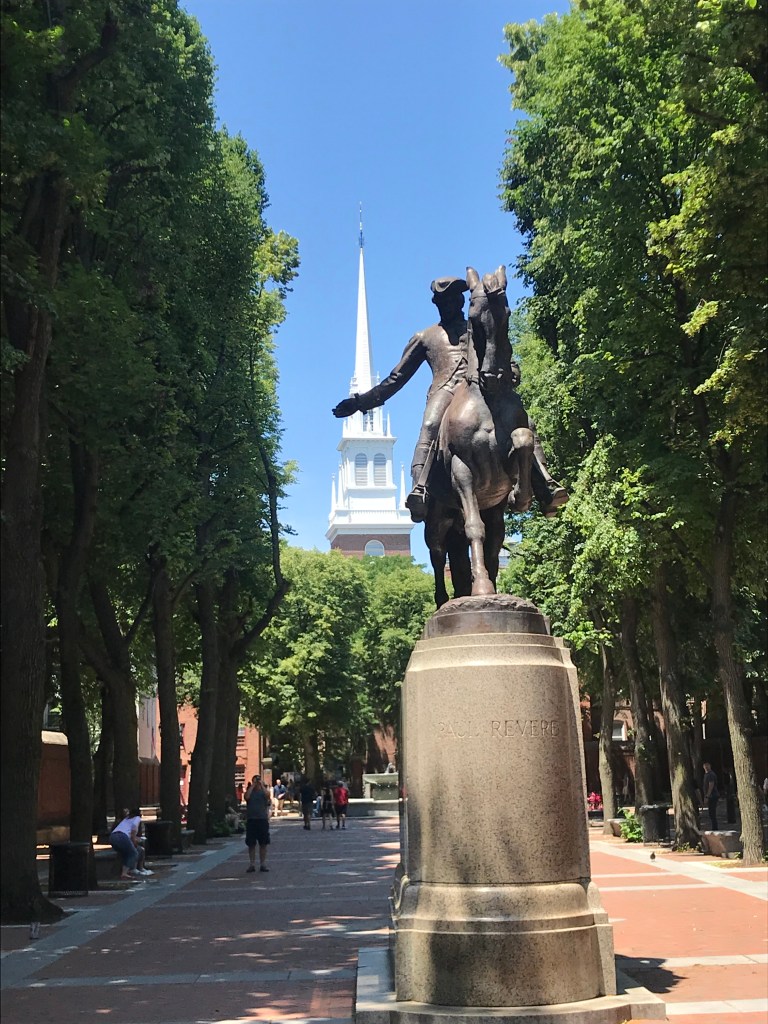
Statue of Paul Revere with the Old North Church in the background. The Freedom Trail, Boston, MA.

After finishing the initial, semi-planned portion of our trip with still over a week left for our vacation, we decided to head to Boston. Arriving in Boston on a Saturday afternoon, we decided to take advantage of the weekend train pass, which allows unlimited trips on the train for only $10 a person, with younger children being free. Because we were staying outside the city, we decided this would be the most economical option, plus it prevented us from having to rent a car and find parking downtown. Wanting to take advantage of our pass, we road the train into the city Saturday evening and spent a few hours exploring the city on foot, before taking the hour-long train ride back to our campground, where we arrived exhausted and thankful that sleep could finally envelop us.

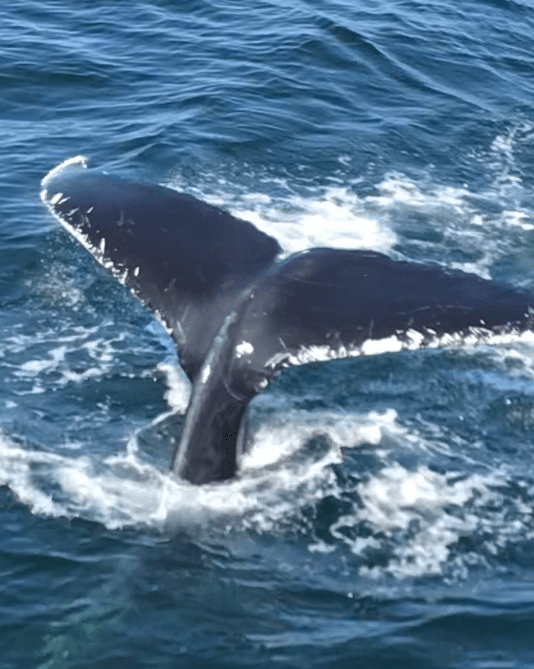
Our train passes also gave us unlimited free train rides the following day, so after riding the train back into Boston, we walked portions of the Freedom Trail and then decided to splurge on a whale watching tour. We were ecstatic to see three humpback whales and a seal on our excursion, watching the whales surface and re-submerge for 30 minutes or more. As I watched everyone hiding behind their phones, trying to capture amazing pictures and videos, I couldn’t help thinking that they were missing the moment and the breathtaking experience.

The next morning we grabbed a rental car, since we choose not to tow a car when we travel in our Class A RV, and we drove to Harvard University, a place with my love a academia, that I have always wanted to visit. After a self-guided tour of the campus, we headed to Cape Cod National Seashore.

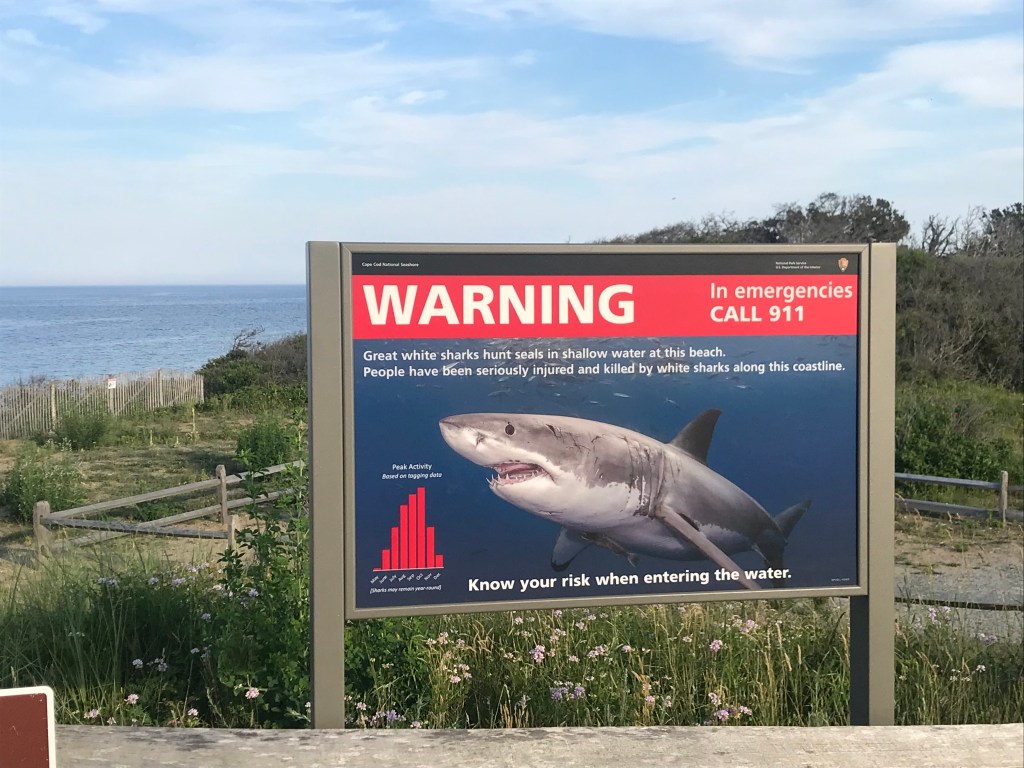
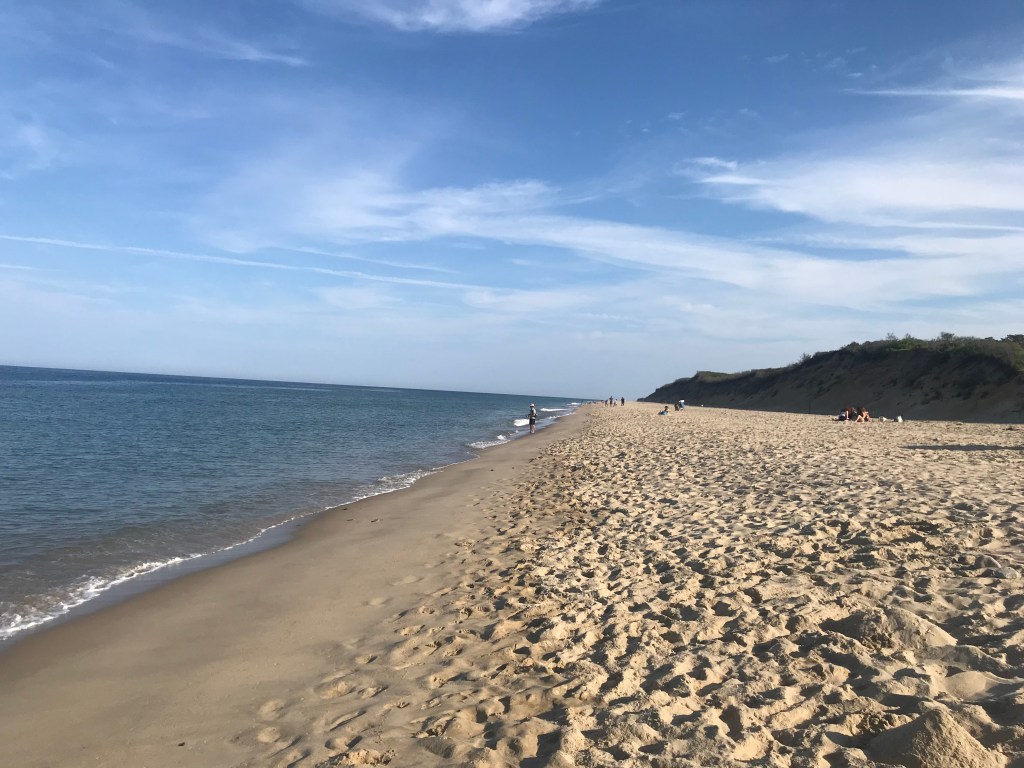
At Cape Cod, signs were posted everywhere to beware of Great White Sharks feeding in the area. As we walked down to the beach and watched seal after seal float along in the water just off the shore, the lure of sharks to the area made perfect sense. Afraid of sharks and mesmerized by the seals, we were content just watching the seals swim up and down the shoreline and walking the shore, enjoying the breathtaking views.

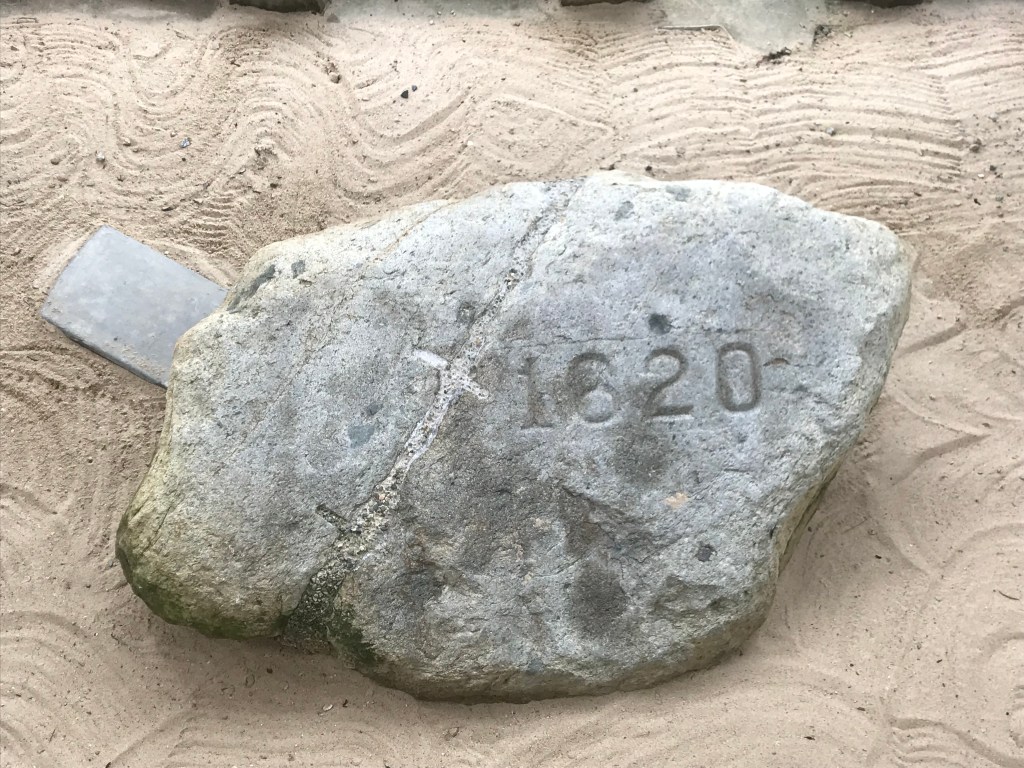
Plymouth Rock, Plymouth, Massachussetts

The next day we had a full day planned. First, Plymouth, Massachusetts to see the landing place of the pilgrims. Second, a trip to Mystic, Connecticut, to briefly explore a state where none of us had ever visited before. Third, to travel to Newport, Rhode Island to see the mansions that have made Newport famous. Each stop was brief, but we determined that would be sufficient for this trip.

We began the day exploring Plymouth. After being in Boston, we were surprised by how quaint and un-touristy the town felt. We viewed Plymouth Rock and visited the 1749 Courthouse Museum. However, in the actual town of Plymouth, there wasn’t much to see or do, so after our brief visit, we headed to Connecticut.

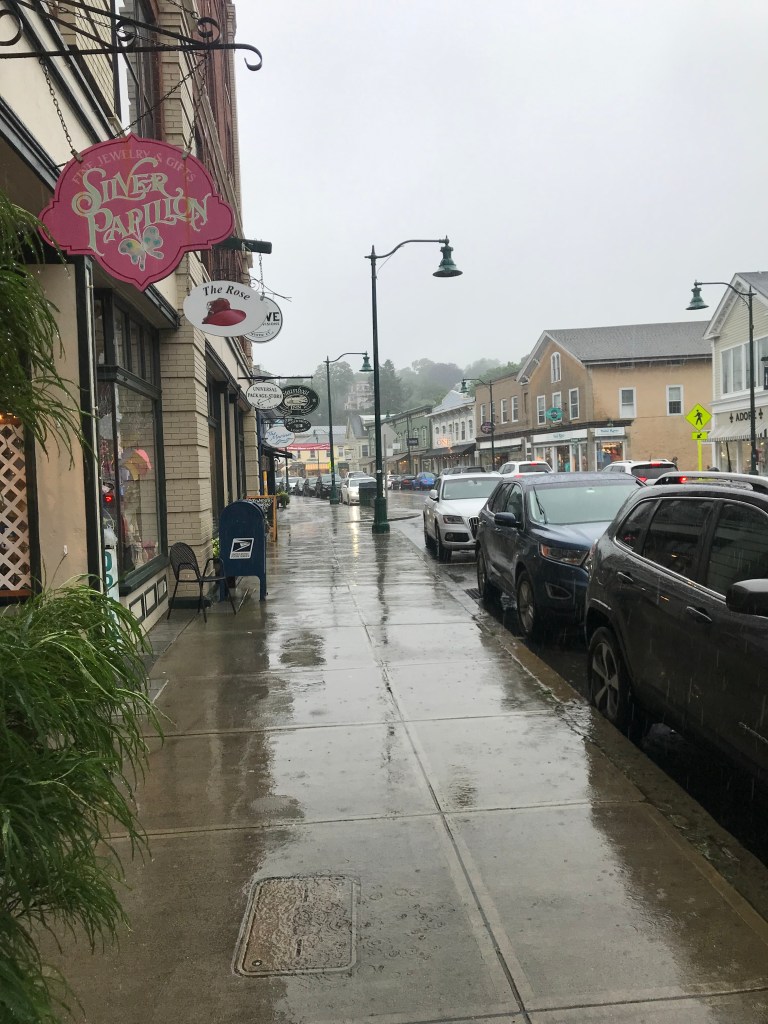
Our dreary afternoon in Mystic, CT

My husband had planned to take us to Mystic, Connecticut to see the Mystic drawbridge open and to walk the quaint town streets. However, the weather had other plans, so we quickly found shelter in the Mystic Drawbridge Ice Cream shop. After enjoying ice cream, it was still pouring outside and the drawbridge hadn’t risen, so we ran through the rain to our car, as we wanted to travel to Rhode Island for the late afternoon. By the time we arrived in Newport, Rhode Island, many of the mansion tours were closing for the day. We drove the streets of Newport in an effort to catch glimpses of the mansions in spite of missing the tours, and though we were able to see some, many were hidden from the road. After driving around Newport, we stopped in Bristol, Rhode Island for a wonderful dinner at an Irish Pub.

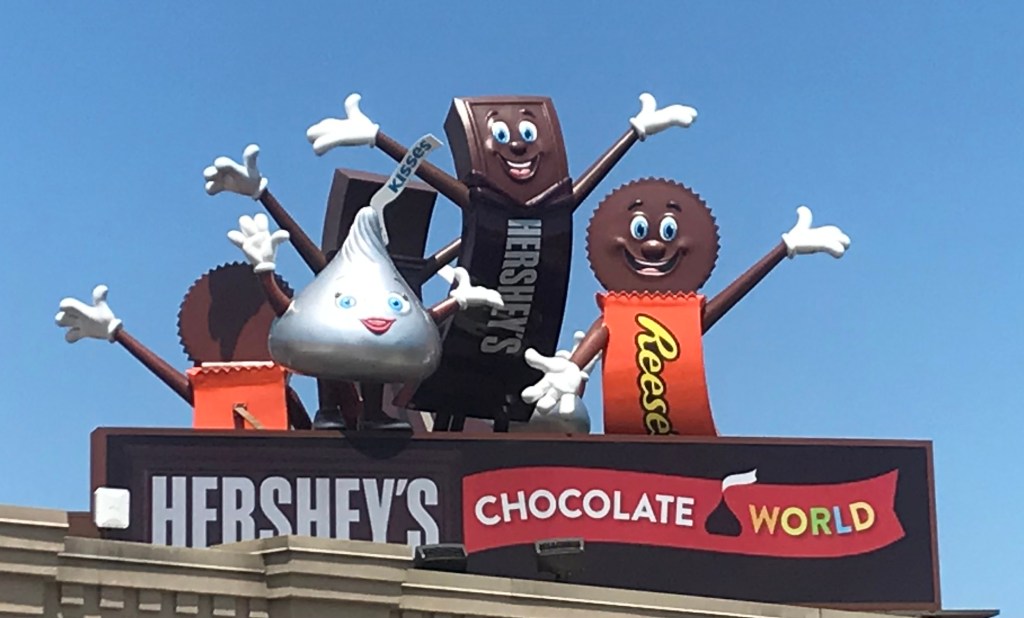
The next morning, we determined that we had done the activities and seen the sites in the greater Boston area that we desired for this trip, so we loaded up the RV once again. Since we still had some time left for our vacation, we decided a trip to Pennsylvania was in order. After a day of travel, we found ourselves visiting Hershey’s Chocolate World in Hershey, Pennsylvania and enjoying a tour explaining how they make their chocolate. We, of course, did not leave until we had purchased A LOT of chocolate!

The next day in Pennsylvania, we found ourselves exploring and walking the grounds at Gettysburg National Military Park. My son had spent the school year learning about much of history surrounding the battle of Gettysburg, so being able to see Gettysburg for himself was one of his favorite portions of the trip. We could have spent days there because of all of the sites and history at the park, but our trip finally needed to come to an end, so we once again loaded our RV, to begin the remainder of our drive home.

Camping in West Virginia

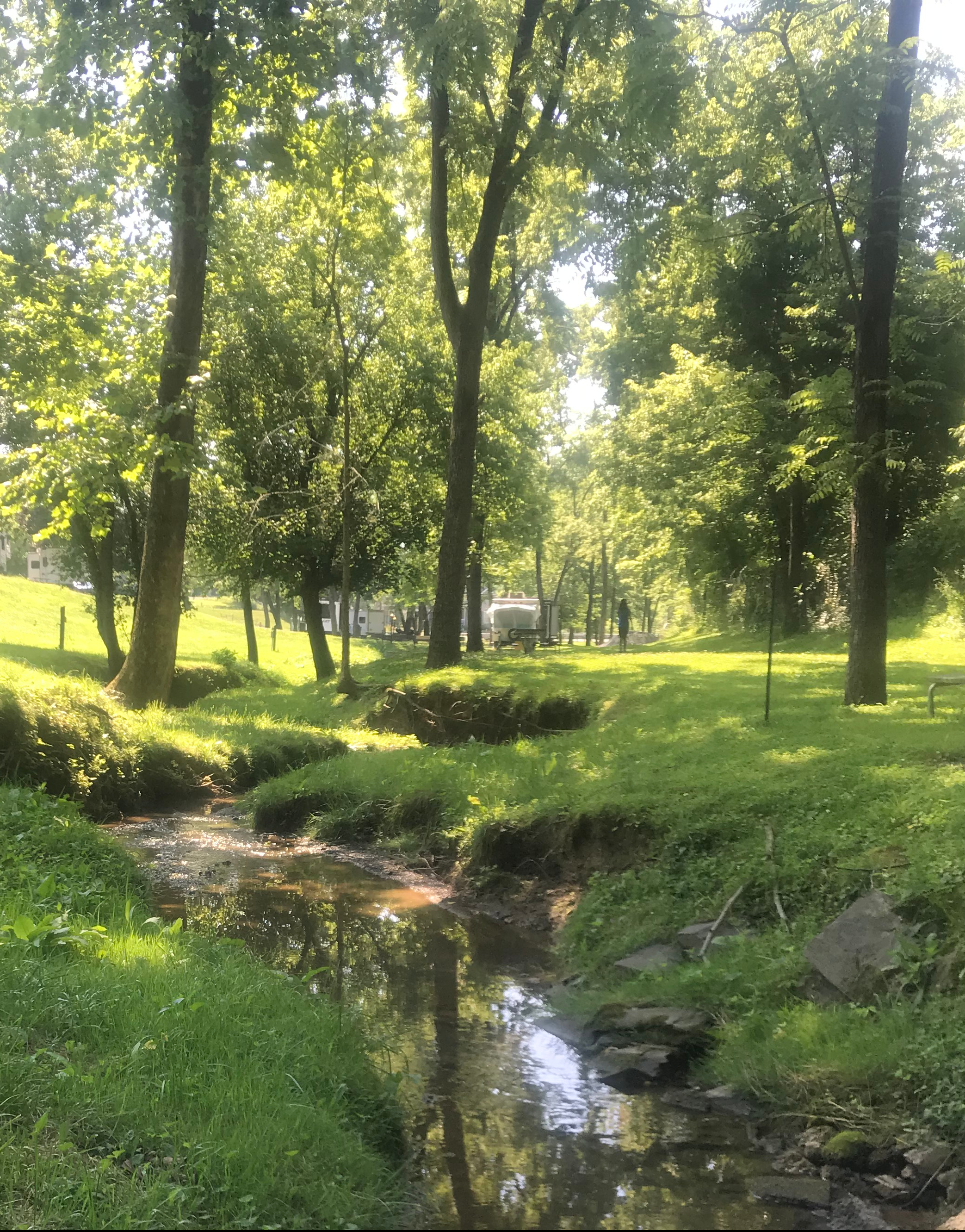
Stopping at an RV park in the mountains of West Virginia that night, we enjoyed watching the kids catch fireflies and play in a creek at the campground. For them, West Virginia was another state they had never before visited, so they enjoyed the opportunity to see and experience more of the continental United States.

After about three and a half weeks on the road, our trip finally came to a close. We had chosen not to stay long at each destination, opting to see and experience our top few sites and activities at each destination, so that we could see as much as possible during our travels.

During our three and a half weeks, we had stared in wonder at Niagara Falls, navigated customs into Canada and back into the United States, hiked the mountains of Vermont, explored beaches and peninsulas of Maine, enjoyed the natural beauty of Acadia National Park, watched humpback whales in the wild, walked much of the Freedom Trail in Boston, explored the Harvard University campus, relaxed at Cape Cod National Seashore, visited Plymouth Rock and the town of Plymouth, traveled to Connecticut and Rhode Island for a day trip, toured Hershey’s Chocolate world, explored Gettysburg National Military Park, and camped for a night in the mountains of West Virginia. Like I said: sometimes our vacations don’t go as planned…they’re even better!

A Tour of the Northeast (Part 1)

Due to COVID-19, any travels that we would have liked to do this summer were put on hold. The amazing trips to Glacier National Park and the Statue of Liberty that I have dreamed of taking for years had to be placed on hold. Quarantine and staying home have replaced exciting travels. However, I have decided to share some of our previous travels since this is a travel blog, with few stories of travel. So, here it goes…

Last summer , we opted to take a break from travels out west, and instead, headed to the northeast. Our plans were to visit Niagara Falls, New York; Stowe, Vermont; and Portland, Maine. However, sometimes our vacations don’t go as planned…they’re even better!

We began our trip at Niagara Falls, a place my husband and I have both previously visited but that we wanted our children to see. Niagara Falls is breathtaking, with three separate waterfalls: Horseshoe Falls, American Falls, and Bridal Veil Falls. We spent the day walking the trails and seeing the various waterfalls. We also walked to footbridge into Canada. To do this, we had to go through customs. Our children had never been out of the United States, so “going to another country” was perhaps more exhilarating than seeing Niagara Falls for several of them. They were excited to go through customs and discover what it was like to visit another country. Granted, Niagara Falls, Canada really isn’t much different than Niagara Falls, New York, but to the kids it was an exciting new experience. We got them each Canadian coins, a snack, and little mementos to remind them of their visit to Canada, and after walking around for an hour or two, we headed back to the United States side of the falls.

After returning stateside, we went to Anchor Bar, the home of the original buffalo wing. My husband had dreamed of eating wings at the place where buffalo wings were created, and his wish came true on this trip! The food was amazing, as was the experience! Once lunch was done, we walked to the top of Horseshoe Falls, the largest of the three waterfalls. As the wind and mist from the waterfall blew across our faces, we tried to savor the experience, taking pictures and attempting to enjoy the view. We stayed long enough to feel like we had made the most of the experience, but determined that the waterfall was definitely more enjoyable from farther off because at this proximity, we were cold and wet! Sad to say good bye, but tired and feeling like we had done everything we wanted, we headed back to our RV for the night.

The next morning we packed up and drove for two days, stopping only for the night, in an effort to get to Stowe, Vermont as quickly as you can in 32-foot Class-A RV. I had dreamed of the day I could return to Vermont, as I had done a brief internship there in college. For me this stop felt like a homecoming. Memories of mountain hikes and fun with old friends filled my mind. Upon arriving, we opted for dinner at the Bierhall at Trapp Family Lodge, as we had read amazing reviews. The food did not disappoint! I ordered Chicken Schnitzel, and the combination of bacon apple kraut, arugula, and braised red cabbage over chicken was phenomenal. I can honestly say it was in the top two meals that I have ever eaten in my life! I still remember the amazing combination of flavors in this mouth-watering meal!

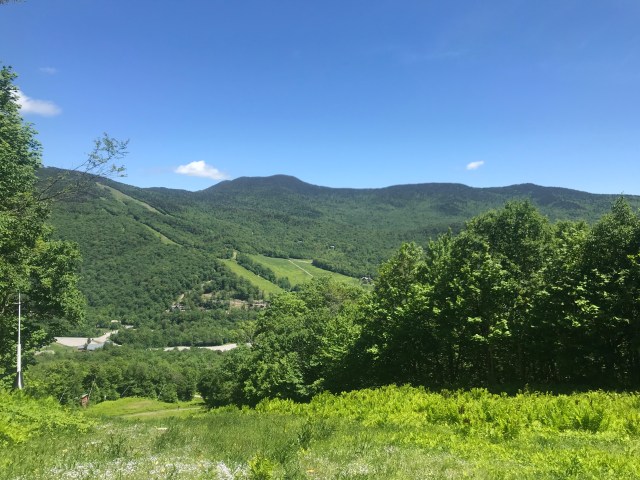
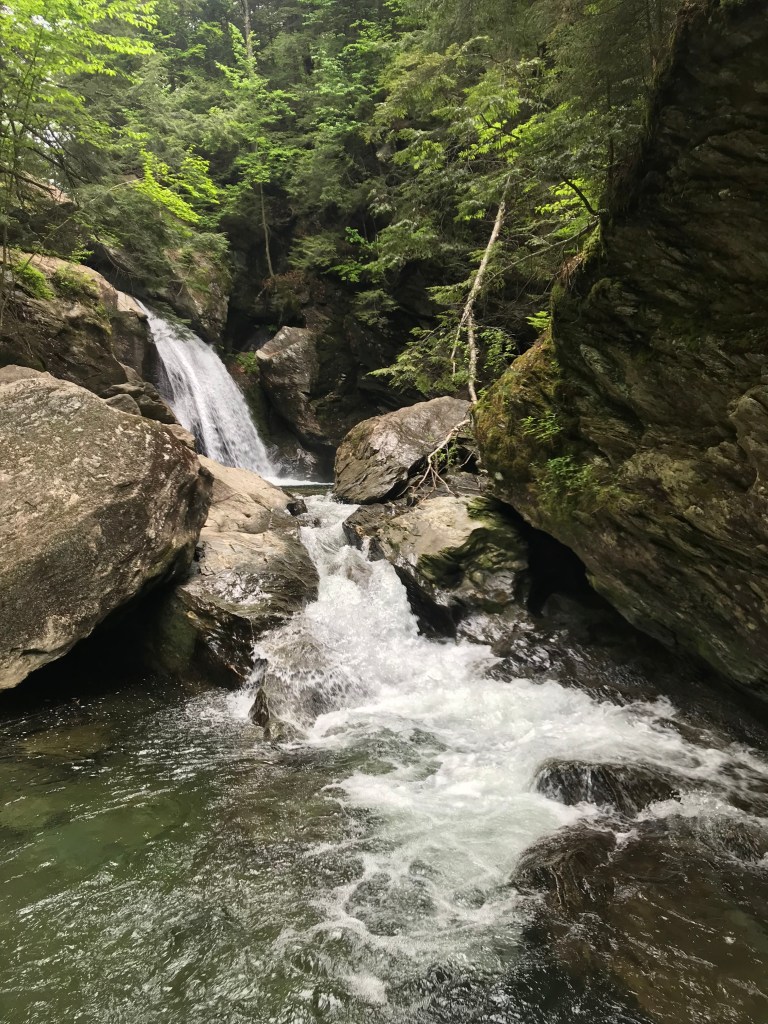
We spent the next two nights camping with our RV in a rustic campground at a state park. Campfires, playing in a cold river at the base of a waterfall, and hiking in the mountains encompassed our next several days. It was a relaxing stay, and the mountain views were breathtaking. When the time for us to leave came, I was reluctant to go. I would have been content staying in the mountains for the remainder of our trip. Perhaps someday I will own a cabin in the mountains, but for now, I try to make the most of vacations that take us to the mountains. However, with other places we wanted to visit, we packed up and headed out.

After a quick stop in Portsmouth, New Jersey to see the town and enjoy dinner on the water, we continued to Maine, our next destination. We spent our first day in Maine, at the ocean in Portland. The ocean was too cold for swimming, but we enjoyed walking on the beach, seeing the town, and eating poutine and lobster rolls.

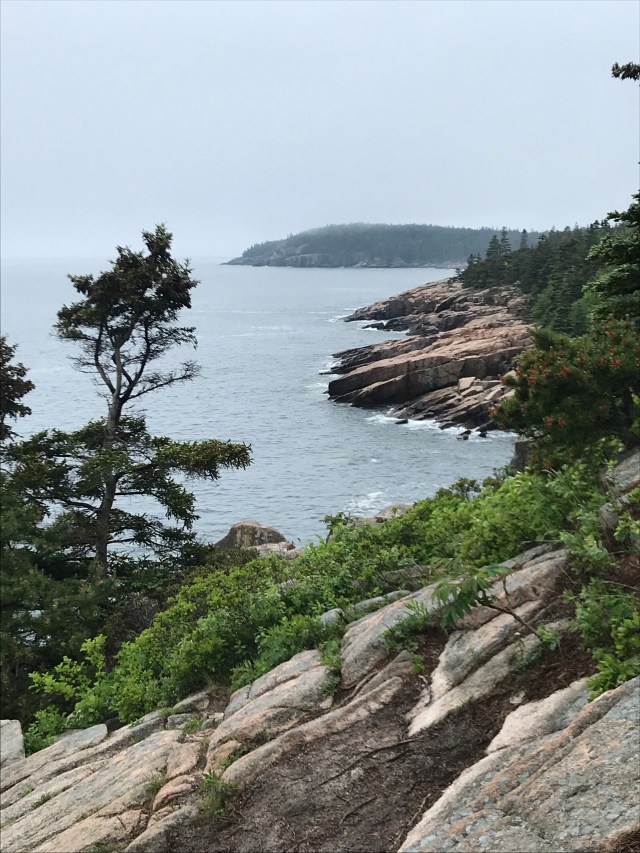
The next day we drove to Acadia National Park, a park that I have always wanted to visit. It was a gloomy, rainy day, as were all of the days during our stay in Maine; however, we tried to make to most of it. We hiked part of Ocean Path and a portion of the Jordan Pond loop trail. We even drove up Cadillac Mountain, but were unable to see anything besides fog. We wished for a better day, but since we had no control over the weather, tried to do as much as we could while there. It seemed like the perfect spot to journal and clear your head, if only we had more time and it had been a nicer day. We added it to the “visit again” bucket list and headed back to Portland where we were staying, but not before stopping to eat surf and turf at a local restaurant.

Our final day in Maine we spent exploring some of the states peninsulas, walking on beaches, visiting lighthouses, and local restaurants with amazing food.

Pemaquid Point Lighthouse

Somehow we were only about a week and a half into our vacation and we had already traveled to all of the states we originally planned. Because we refuse to schedule every waking moment of our vacations, this is a risk we run, but not necessarily a bad problem to have–extra time to see more places. My husband and I sat down to discuss what we wanted to do with our extra time and decided on visiting Boston, a place we had always wanted to travel, but had no intention of visiting on this trip. Yes, we could have spent more time in Maine, but we had done the top four things we had wanted to do: eat surf and turf, visit Acadia, tour the peninsulas, and visit the ocean. Since we had done all of these things, we decided to enjoy another part of the northeast, so the next thing we knew, we were packing up and preparing to head to Boston…

Unexpected Travels

Lock down. These two words have summed up our life for the past four months. We have had hundreds of conversations with our children explaining that we could not travel this summer as we typically do, and that besides trips to the library with face masks on and occasionally seeing local family, we would be home all summer. However, unexpected circumstances required that we travel to Michigan on short notice.

It has been four years since we have been to Michigan, and we didn’t have much time for our usual vacation activities because of other obligations. However, we were able to squeeze in time for a few hours of fun during our four days in Michigan.

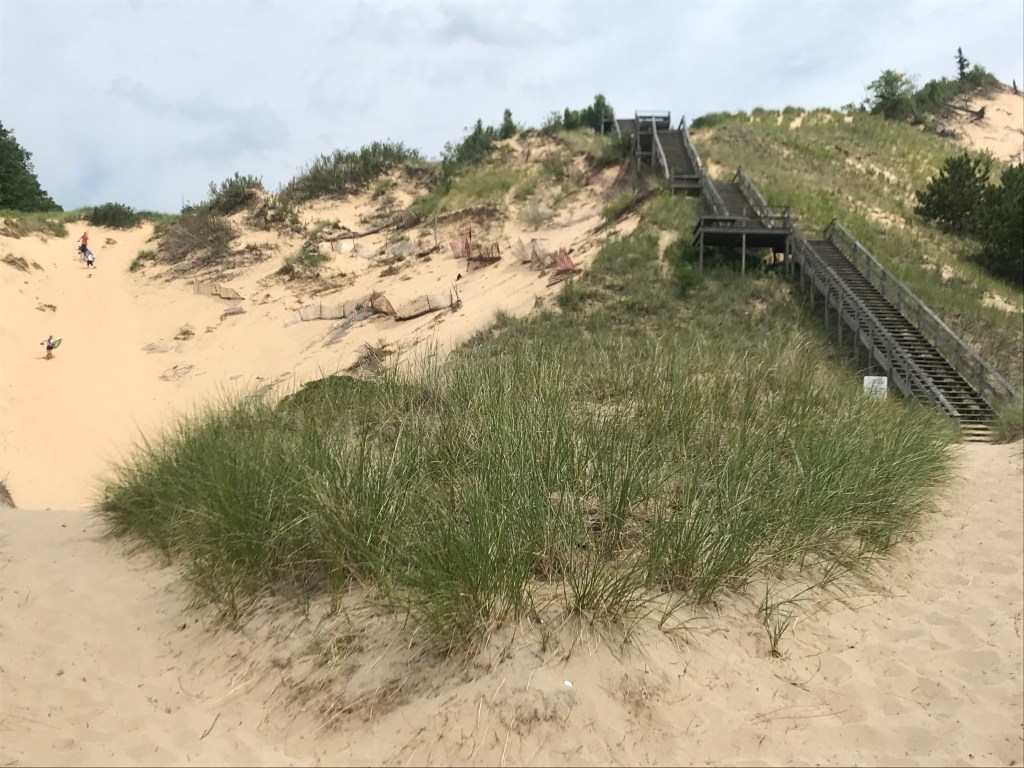
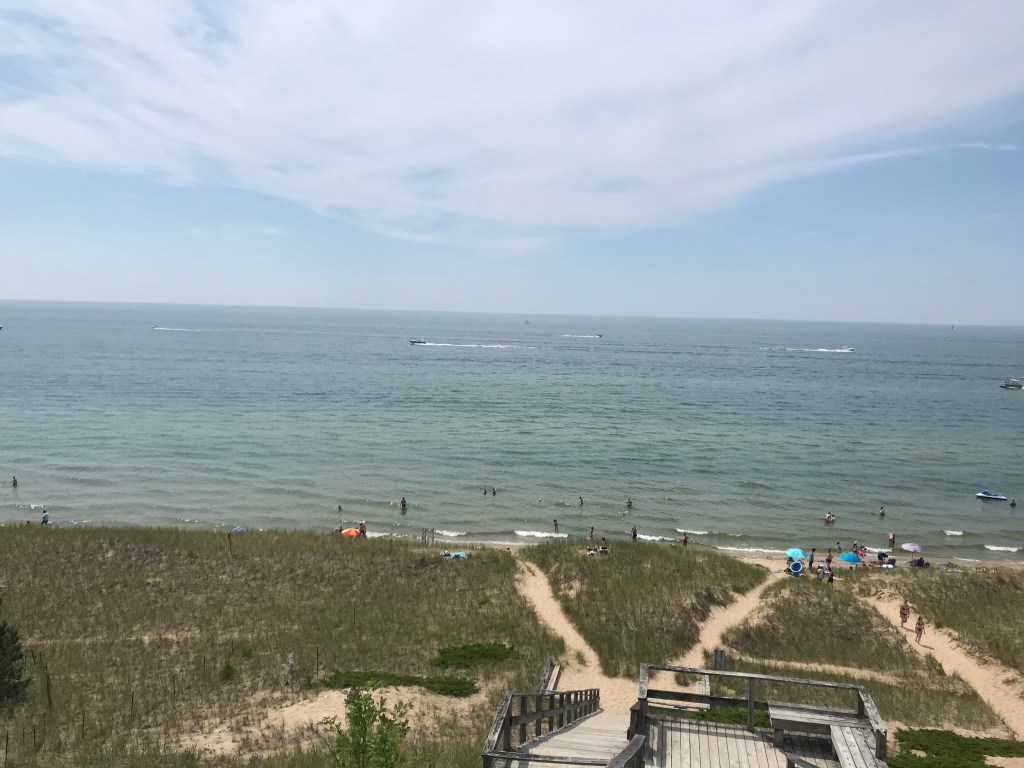
On the Fourth of July, we traded our usual warm summer beaches for the sand dunes and cold waters of Lake Michigan, going to a remote beach about which only locals know. The landscape along Lake Michigan is breathtaking. Sailboats dotted the horizon and people relaxing in boats were enjoying the warm summer day.

With the lake at your front and huge sand dunes at your back, there are gorgeous views no matter where your gaze lands. The kids, not being accustomed to northern lakes, strolled in for a few minutes, and then sat on the beach shivering with purple lips. However, my youngest stayed in the water with me, saying over and over, “This is SO refreshing.” She definitely took advantage of the opportunity be in the water and swim, while my other kids sat looking bored. After staying an hour and a half, we decided none of the kids (besides one) seemed to be enjoying themselves, so we went for a drive through Michigan’s farm country and some of its small towns, then headed back to where we were staying.

A few days later, we met some people at Russ’ Restaurants in Grand Rapids for lunch. Russ’ is a family owned diner and is unlike any that we find where we live. I had been telling my husband since we arrived in Michigan, that I really wanted some good fried fish. Much to my surprise, Russ’ had fried perch on their menu. Knowing how much I had missed good fried northern lake fish, I savored every bite.

Since it was our last day in town, we also decided to go to our favorite buffet in the entire United States, actually the only buffet I like: Pizza Ranch. The self-serve buffet style that we are used to was replaced by cafeteria style service. When we first walked in I was a little concerned that the workers would discover how much food I truly eat at buffets. The restaurant was essentially empty, with very few patrons, but any fears were quickly alleviated because the skeleton crew at the restaurant was doing an excellent job of helping where needed, so whoever was available gave you food when you wanted it. In my mind, this made it so no one realized that I ate about seven plates of food. Relieved, I was able to settle in and enjoy the experience…as much as you can enjoy how you feel after eating seven plates of food!

Besides their unique pizzas, such as their Texan (taco) pizza, the thing that I love about Pizza Ranch is that if there is a specific type of pizza that you want from their menu that is not on the buffet, many franchises allow you to order the pizza and have as many of the pieces that you desire brought to your table, while putting the remainder on the buffet. Because of this, you are able to have your favorite types of pizza, fresh each time you visit. I was a little saddened that Macaroni and Cheese Pizza had been taken off the menu, but with so many other options to choose from, I definitely enjoyed the experience.

We finished the day meeting a friend at Thornapple Brewing Co., enjoying a local beer made from hops provided by West Michigan Hopyards. It was a great way to end our last day in Michigan.

This definitely was not a typical vacation for us, but we managed to squeeze in a little fun and good food. With our bleak view of no or minimal travel until the summer of 2022, this short trip, though in many ways stressful, was also a welcome relief for a family of six tired of being stuck in the house together with nothing to do. I am thankful to have had this short trip, even if it was nowhere close to the typical vacation that I would have planned…

Saving Money for a Trip

The idea of saving money for vacations comes easy for some people, but more challenging for others.  Depending on your income, expenses, number of children, and other factors, traveling may feel more or less out of reach.  My husband and I decided many years ago that we wanted to make opportunities for our family to travel and have new experiences, so we have found ways to make it work based on our various seasons of life.

Here are some of the strategies we have discovered that help us save money for our travels.

1. Create a separate account for travel

By creating a separate account for travel, you can take the money that you save throughout the year and put it in the account.  When you are saving money in some of the ways listed below, you can take the money that you would have spent on those expenses, and put it into your travel account.  The account can be a separate account at your bank or just an envelope, along the lines of Dave Ramsey’s system.  By having some type of separate account, you intentionally devote money toward a fun vacation, allowing your family to reconnect and unwind.  By having a specific travel account, when it comes time to travel, it also helps you stay on budget because you know the amount of money you have in your travel account.

2. Get Rid of Unnecessary Expenses in Your Life

One thing that we have done to help save money on travel is to get rid of cable TV and internet. (Gasp.)  Our family decided this was an unnecessary expense that we could live without. When we need internet, we use our phone as hotspots to assess the internet, and we have a TV antenna when we want to watch TV.  Do I sometimes miss just being able to turn on the computer and have internet access?  Absolutely.  Do I love watching the old westerns that play on our antenna based TV?  Not really.  However, Andy Griffith kind of grows on you after awhile.  By getting rid of these two things, my family saves about $1500 per year, which becomes a large portion of our travel budget.

3. Limit Going out to Eat

Going out to eat can be a major expense for families.  By the time you get drinks, appetizers, and meals for a large family, you can easily end up with a bill over $100.  My family loves to eat, but this is another big place we try to save money.  We limit meals out to once or twice per month.  We also typically opt not to get beverages or appetizers.  Instead, we opt for water (drinking soda and other beverages at home) and if there is an appetizer that sounds really good, we either go to the store and purchase an entire box of the appetizer or we find a recipe online that tells us how to make the appetizer at home.  At restaurants we primarily stick to meals. Also, one of our favorite restaurants offers two free kid’s meals with each adult entrée.  If we want to go out to eat, we plan our evening out on a night with free kids meals.  By doing this, it substantially cuts down on the cost of our bill.  That is not to say that sometimes we don’t splurge and get sodas, appetizers, and steaks.  It is just limiting the frequency of those occurrences and placing the saved money into our travel account.  Also, making unique meals at home can become a fun hobby.  We have made hotdogs with macaroni and cheese on them, hamburgers with eggs on top, and many other fun creations that can be found at restaurants. By limiting meals out, it has encouraged our family to spend time cooking together and exploring new recipes. 

4. The Newest-Coolest Technology

Technology can also be a major expense.  Having the newest-coolest phone, TV, game system, or ipad can be fun, but the reality is that they will be outdated within the next 2-3 years anyways.  Now, I do realize that some people’s “thing” is technology, and they would much rather have great technology than travel.  If that is you, then that’s perfectly fine.  However, if you are wanting to save money for travel, perhaps you can live with your 5 year old TV another year or two, and maybe the kids can take turns with the one Ipad they already have.

5. Thrift Stores and Sale Racks

Young children outgrow their clothes quickly.  Rather than buying new clothes for them every year, try to find the best thrift store in town…the one that has great clothes and reasonable prices.  The thrift store that I use sells name brand kids clothes for $1-$4 each, depending on the item.  I also shop sale racks at stores.  Children’s Place and Crazy 8 have amazing sales, and very cute clothes!  I also opt for sales racks myself.  My favorite store is somewhat expensive, and even though I browse the store to see what cute things they have, I typically only purchase items off the sales rack.  Finding stores that have good sales and reward programs are great options for a family trying to save money.

There are obviously other ways to save money for trips, such as picking up a part-time job on the side or working over-time at work.  Even older kids can make some extra cash for souvenirs on the trip by mowing grass or babysitting.  However, the above strategies are ways we have found to save money as we go through our “regular” life.  We don’t go out of our way to work 60 hour weeks to save money.  We just make sacrifices throughout the year, and by doing that, we easily save the $2000-$3000 that we budget for travel each year.

Managing the Car Chaos

Choose a variety of unique activities for road trips.

Many people will make groaning noises when I talk about traveling with kids, and for many people, traveling with kids is a horrifying experience.  Perhaps it is because we have traveled with our children since they were little or perhaps it’s because the Big Man Upstairs hears my prayers, but whatever the reason, my children travel really well.  We have taught the kids a love for travel, and sometimes the excitement helps them survive a long road trip without much complaining.

However, there are some simple things we have put in place to survive and make the time feel like it flies. 

1. Use a Variety of Activities in the Car

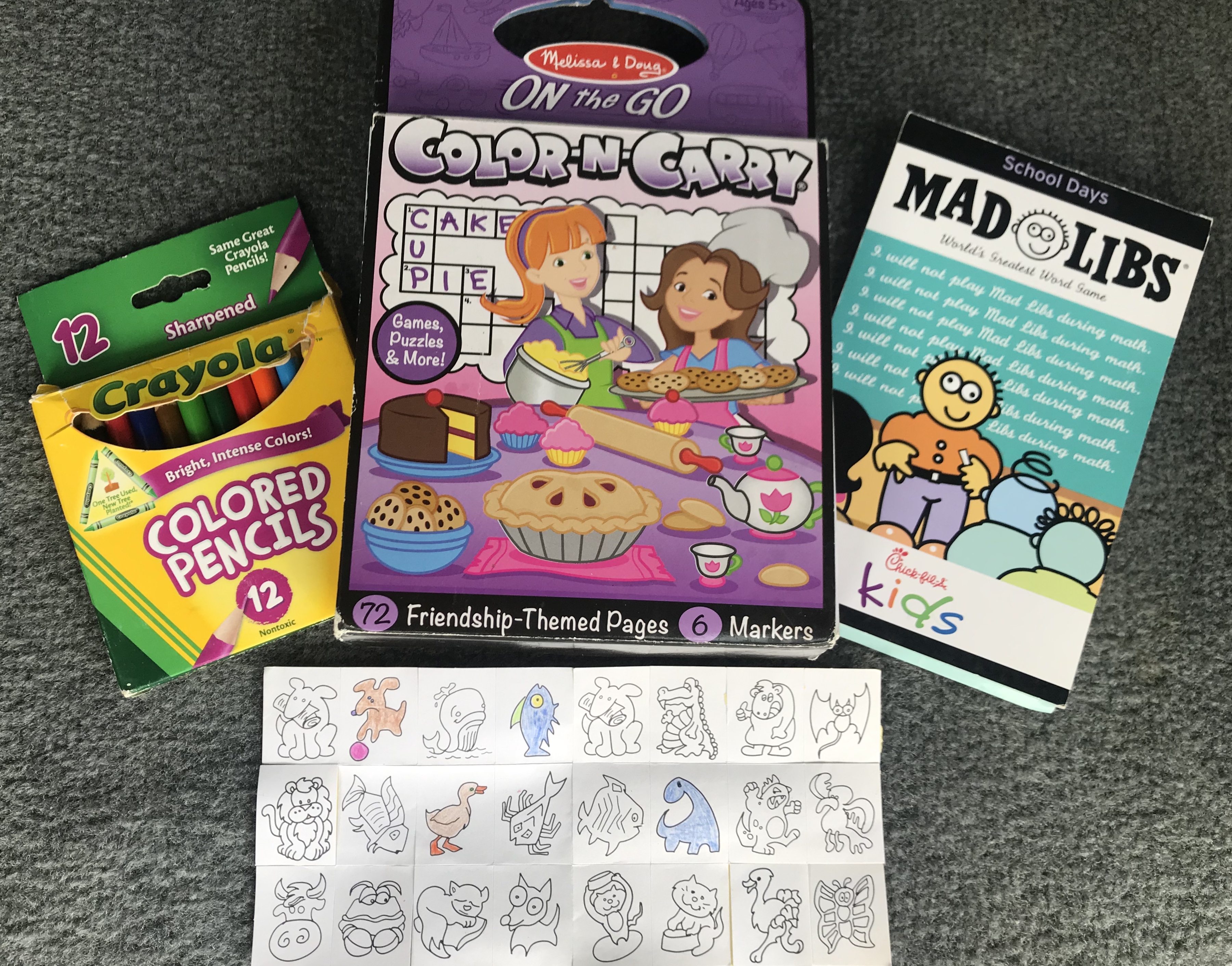
Too much of one activity will create boredom and complaining in children on long road trips.  Do not put on movie after movie and expect your children to “be good” and watch them for 12 hours.  You need a variety of different activities.  Put together a fun song list and sing along.  Play travel bingo and the alphabet game.  Try to find license plates from as many states as possible.  Watch a movie.  Color in a coloring book.  Call Grandpa and Grandma on speaker phone to tell them where you are going (on the way there) or what you did on your trip (on the way home).  Read a book.  Play games on a tablet or phone.  Take a nap.

2.  Structure your Time in the Car

Schools and daycares have schedules to make the day run smoothly. Having a “schedule” on a road trip helps the trip run smoothly. Basically, think in terms of one to two hour chunks of time; much longer than that and any activity will lead to complaining. 

The schedule can be in your head only and can be very flexible. For example, sing silly songs for an hour, and when the kids seem to be getting out of control with the silliness, tell them it’s time for everyone to read for 30 minutes.  Once they are done reading, suggest the alphabet game.  After playing a few rounds of the alphabet game, let them find something to entertain themselves for a while.  Remind them that in X amount of time, they will get to play on their technological devices if they are making good choices.  After an hour or two of allowing them to play on the technology, plan a stop.  This creates a natural reason for everyone to surrender their devices without it leading to meltdowns.  Once back in the car, play a couple rounds of travel bingo or color.  Then, as the day winds down, put on a movie for the kids.  With all of these activities, 12 hours passes relatively quickly in the car and the kids don’t have much time to get antsy.  The key is to switch activities when the kids seem to be getting bored, restless, excessively silly, or start to argue and whine.

3.  Have Special Activities that are Only Reserved for Road Trips

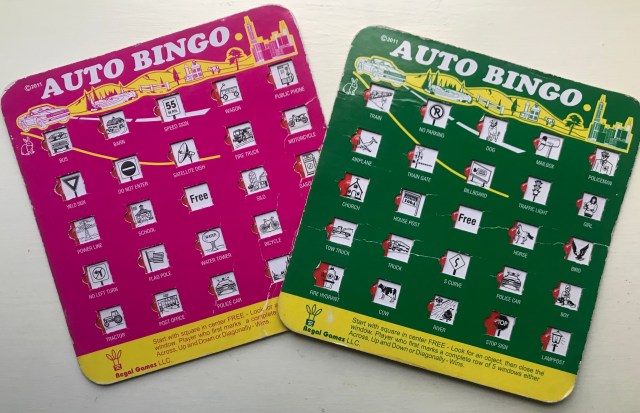
Our well-loved game of travel bingo is a great addition to any road trip!

It is important to make sure that you have special activities that are only reserved for road trips.  If you let the kids play travel bingo every time they get in the car, it is less likely to hold their interest on a road trip.  We keep special stickers in the car that can be colored with colored pencils.  When the kids start to get bored, I pull them out and say, “Look what I found; who wants to color some stickers?”  Because we don’t have any coloring stickers at home, these are intriguing to the kids.  Having a few unique activities for the kids to do in the car helps hold their interest.  Just make sure any special activities are car-friendly. 

Also, technology is great on road trips, but if your kids watch TV or play on devices constantly while they are at home, those things will not hold their interest long on a road trip.  To combat this, you may need to buy or rent a newly released movie or download a new game, or consider limiting the amount of technology usage prior to a trip so that the kids will be excited to have technology back and it will hold their attention for several hours.

4. Plan Stops around Meals and Gas

Ever been on a road trip and had to stop every hour because someone else has to use the bathroom?  This can make a 12-hour road trip last an extra 2-3 hours.  As with any activity on a road trip, it is important to be strategic.  Plan to stop every 3-4 hours, keeping in mind that things will not always go as planned.  However, it is a good idea to “top off the tank” every three to four hours and this also coordinates well with meal times.  While driving, we give out beverages strategically (i.e. small “sips” along the way and more about thirty minutes before planning to stop). When we stop, we always have all of the kids use the restroom before departing. Additionally, we tell the kids the next time we plan to stop; for the older kids, they understand that they cannot drink two entire soft drinks when we don’t plan to stop for another 3 hours.  Younger children may need help with this idea. 

If you communicate your planned stops and time frame with the kids, after a little teaching, it is amazing how well they buy into the plan, especially if they understand that less stops means they will get to their destination sooner!

5.  Try to Find a Stop that has Gas and a Restaurant at the Same Exit

Find an exit that has the gas you need, a restaurant where you want to eat, and the coffee you want to drink.  This strategy saves you time getting on and off at different exits.  More stops at more exits equals more time.  Part of structuring a road trip includes wasting less time and making smarter stops.  Time wasted in the car means longer time and more chances for the kids to get bored.  Boredom is the enemy of a good road trip with kids!

6. Find little ways to Reward your Children Along the Way

Rewards keep things exciting for children, as children love rewards and surprises.  Rewards do not need to be expensive or elaborate.  They can be little things such as: after you read for 30 minutes, we will then watch a favorite movie or once nap time is done, we will have a special snack.  These little rewards, if done correctly, cause your children to look forward to little things along the way.  Again, it does not have to be big or elaborate, just something for the kids to anticipate.  This also can help the road trip pass more quickly in their minds.

7.  Keep a Positive Attitude

Silly songs are a great way to improve the mood on a road trip; consider choosing music with a song book to allow the kids to follow along.

If you, as a parent, begin to make comments about the road trip taking forever or being sick of riding in the car, I can almost guarantee that the kids will also begin to complain.  It is important to keep a positive attitude, even if you don’t feel very positive.  Kids model adult behavior.  If you can make the road trip seem fun and do little activities along the way, the kids will believe it is fun.  However, if you complain about how terrible the trip is, you are sure to begin hearing complaints from your kids.  Keep the complaints to yourself and choose to set a positive tone for the trip; it will make the trip more enjoyable for everyone!

Above all else, happy travels!

All About Me

Four years ago, my husband and I took a chunk of our savings and purchased an RV. It was not the newest, coolest RV, but it ran well and fit our needs. Since that time, we have traveled with our family to forty states. We have watched the sun set over Grand Canyon, explored the nation’s capital, viewed bison grazing at Yellowstone, and much more.

For us, travel is a chance to unwind from the stressors of life, reconnect as a family, see new places, have new experiences, and reflect on life. When I hike to the top of a mountain, somehow the world looks different; my head is cleared and the stressors that seemed so overwhelming just a few hours previously, fade away.

As a mother of four, my husband and I have learned to plan cost-effective, family vacations that interest both us and the kids. We are an average American family, and both my husband and I work full-time jobs, but we have made sacrifices in certain areas to be able to travel. We don’t have the newest, coolest cars or technology, but my kids have been places that many adults have never been.

I hope that through this blog, you are inspired to begin traveling with your family. My desire is for you to glean tips for managing the chaos of traveling with a family and that you gain ideas for family vacations. I also hope to induce thought provoking reflections because perhaps the best part of traveling, is seeing the world through a new lens.